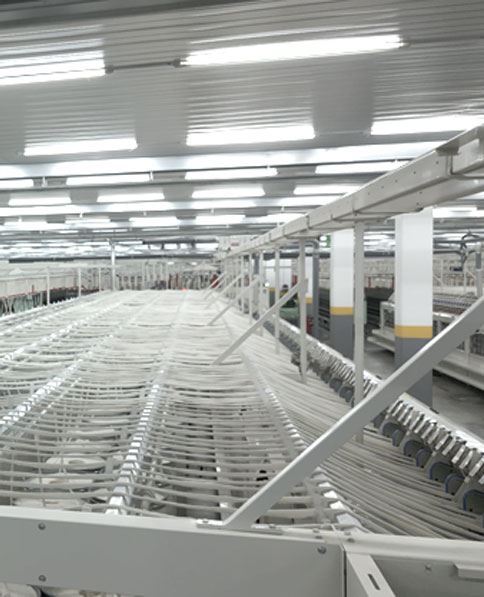

Air Conditioning Systems in Textile Factories
Textile manufacturing depends on tightly controlled air conditions far more than most industries. A few degrees of temperature drift or a sudden swing in humidity can ruin an entire batch of yarn, weaken fabric tensile strength, or send dust levels through the roof. That is why air conditioning in a textile factory is never just about comfort. It is a production tool, and arguably one of the most important machines on the floor.
This guide walks through what makes HVAC systems in textile plants different, what problems they actually solve, and how to choose the right setup for your facility.
Why Air Conditioning is Essential in Textile Manufacturing
Textile production is built on fibers, and fibers respond to their environment in ways that other materials simply do not. Cotton expands when the air is humid and becomes brittle when it dries out. Polyester builds up static electricity in low-humidity conditions and starts misbehaving on the spinning frames. Wool absorbs moisture so readily that its weight can fluctuate by several percent in a single shift if the room is not controlled. None of these issues can be fixed by the machinery itself, no matter how advanced it is.
This is the reason why air conditioning was adopted by textile mills long before most other industrial sectors took it seriously. The earliest industrial climate control systems in the world were actually installed in cotton mills, and the logic has not changed in more than a hundred years. If you want consistent yarn count, even dye uptake, and predictable shrinkage rates, you need predictable air.
There is also the question of machine performance. Modern spinning, weaving, and knitting equipment runs at very high speeds, and the tolerances built into these machines assume a stable thermal environment. When the ambient temperature climbs, bearings expand, lubricants thin out, and electronic controls start drifting. Production speed has to be reduced to compensate, which translates directly into lost output.
Finally, there is the matter of waste. Every break in a yarn line, every misaligned weft thread, and every faulty knit stitch usually traces back to one of two causes: a mechanical issue or an environmental one. Solving the mechanical side is straightforward. Solving the environmental side requires a proper HVAC system designed specifically for textile work.
How Humidity and Temperature Control Affect Fabric Quality
Humidity is the single most influential factor in textile processing. Most natural fibers behave best within a fairly narrow relative humidity range, typically somewhere between 50 and 70 percent depending on the fiber type and the process stage. Drop below that band and the fibers become stiff, generate static, and break more often. Go above it and the fibers stick together, absorb too much moisture, and slow down the machines.
Temperature works hand in hand with humidity. The two are linked physically, which means you cannot adjust one without affecting the other. A skilled HVAC system for a textile plant uses this relationship rather than fighting it, conditioning the air so that operators do not have to constantly chase setpoints throughout the day.
Dyeing and finishing departments have their own particular needs. Color consistency depends heavily on stable air conditions, because variations in temperature and humidity affect how dyes bond to fibers. A batch dyed in the morning under one set of conditions can look noticeably different from a batch dyed in the afternoon if the room has not been properly controlled. For brands that hold their suppliers to strict color matching standards, this is a serious commercial issue.
Weaving rooms are another area where small changes have large consequences. Warp threads under tension are extremely sensitive to humidity shifts. Even a five percent change in relative humidity can increase warp breakage rates significantly, leading to slower production, more downtime, and lower quality finished cloth. Maintaining a stable atmosphere is not optional in these spaces.
How to Solve Dust and Lint Problems in Textile Mills
Anyone who has walked through an active spinning or weaving floor knows the amount of airborne fiber a textile operation produces. Lint, dust, and fly accumulate on every surface, clog filters, settle into electrical panels, and create both fire risks and respiratory hazards for the workforce. A proper air handling system is the difference between a clean, safe plant and one that fights these problems every day.
Effective dust control in a textile factory usually relies on a layered approach rather than a single solution. The most common elements include:
- High-efficiency filtration units installed at strategic return points throughout the production area, capturing airborne fiber before it can settle on machinery or recirculate.
- Rotary drum filters and self-cleaning filter systems that handle the heavy lint loads typical of cotton and blended fiber operations without requiring constant manual cleaning.
- Localized extraction hoods placed directly over high-dust processes such as opening, carding, and combing, where fiber release is most intense.
- Pressurized cabinets and enclosures around sensitive electronics and quality inspection zones to keep fine particles out.
- Regularly scheduled duct cleaning and filter replacement protocols, integrated into the maintenance calendar rather than treated as an afterthought.
Beyond the equipment itself, the layout of the ventilation system matters enormously. Air should be supplied in a way that moves contaminants away from operators and toward extraction points, not the other way around. Poorly designed airflow patterns can actually make dust problems worse by stirring up settled fiber and spreading it across the floor.
Investing in proper dust management also pays back through reduced cleaning costs, longer machine life, and fewer fire incidents. Textile fiber is highly combustible when accumulated, and many of the most damaging factory fires in the industry have started in neglected ductwork or filter rooms.
Energy-Efficient HVAC Solutions for Textile Facilities
Energy consumption is one of the largest fixed costs in any textile plant, and HVAC systems often account for a substantial share of that bill. Older installations were rarely designed with efficiency in mind, which means most mills built before the last decade are running with significant room for improvement. Modernizing this side of the operation is one of the most reliable ways to reduce overhead without affecting production quality.
Variable frequency drives on fans and pumps are usually the first upgrade worth considering. Traditional fixed-speed motors run at full capacity regardless of actual demand, wasting energy whenever the plant operates below peak load. VFDs adjust motor output to match real conditions, which can cut electricity use by twenty to forty percent on the affected equipment.
Heat recovery is another area where textile plants tend to leave money on the table. Drying and finishing processes release enormous amounts of warm, humid air that is typically vented straight outside. Capturing even a portion of that energy through a properly designed recovery system can offset a meaningful percentage of the heating and humidification load elsewhere in the building.
Smart controls and zone-based management have also become standard in modern installations. Rather than treating the whole factory as a single climate zone, advanced systems condition each area according to its specific needs, allowing the spinning room, the weaving hall, and the warehouse to operate under different setpoints without conflict. This avoids the common problem of over-conditioning one area just to meet the requirements of another.
Finally, regular commissioning and performance audits make a measurable difference. HVAC systems drift over time, dampers stick, sensors fail, and settings get changed without documentation. A scheduled review every twelve to twenty-four months catches these issues before they translate into wasted energy and degraded process conditions.
The Impact of Proper Ventilation on Worker Health and Safety
The people working on a textile floor spend eight to twelve hours a day surrounded by airborne fiber, machine heat, and process chemicals. Without proper ventilation, that environment becomes a health risk, and the consequences show up in absenteeism, turnover, and long-term occupational illness claims. A well-designed HVAC system is not just a quality tool, it is a fundamental piece of workplace safety infrastructure.
Respiratory health is the most immediate concern. Long-term exposure to cotton dust has been linked to byssinosis, a chronic lung condition that affected generations of mill workers before modern ventilation became standard. Even with synthetic fibers, fine particles released during processing can irritate airways and worsen pre-existing conditions like asthma. Proper extraction and filtration dramatically reduces these exposures.
Heat stress is the other significant risk, particularly in regions with warm climates. Textile machinery generates considerable heat, and when ambient temperatures climb during summer months, indoor conditions can become genuinely dangerous. Workers slow down, make more mistakes, and in severe cases experience heat-related illness. A cooling system that maintains reasonable working temperatures protects both productivity and health.
There is also a regulatory dimension. Most countries now have occupational exposure limits for airborne dust, noise, and indoor temperature, and these limits are increasingly enforced. Factories that fail to meet them face fines, mandatory remediation, and reputational damage with both customers and the labor market. Building a workforce becomes much easier when conditions on the floor reflect modern standards rather than those of fifty years ago.
Which Air Conditioning Systems Are Best for Textile Factories?
Choosing the right system depends on the type of fiber being processed, the scale of production, the local climate, and the specific processes involved. There is no single answer that fits every plant, but certain system types have proven themselves repeatedly in textile applications:
- Central air washer systems remain the workhorse of the industry, particularly for spinning and weaving operations. They handle large air volumes, control humidity precisely through direct water contact, and integrate well with dust extraction. For high-volume cotton mills, this is still the most common choice.
- Adiabatic cooling systems work especially well in hot, dry climates where evaporative cooling can carry most of the temperature load without the energy cost of mechanical refrigeration. They pair naturally with the humidification needs of textile processing.
- Chilled water systems with air handling units offer the most precise control and are typically the right choice for dyeing, finishing, and quality control areas where temperature stability matters more than raw cooling capacity.
- Hybrid configurations combining adiabatic and mechanical cooling have become increasingly popular, allowing the plant to use the most efficient cooling source available at any given moment based on outdoor conditions.
- Dedicated outdoor air systems are useful additions in plants where fresh air requirements are high, separating the ventilation function from the main conditioning load and improving overall efficiency.
Process areas with very tight tolerances, such as technical textile production or medical fabric manufacturing, often need cleanroom-grade conditioning rather than standard industrial HVAC. The investment is higher, but for high-value products it is usually justified by the reduction in defect rates.
The right approach is to start with a detailed assessment of the production processes, the existing building envelope, and the local climate, then design the system around those specifics rather than relying on generic specifications.
Upgrade Your Factory's HVAC Infrastructure with Tufekci Machine
Building or upgrading an air conditioning system for a textile facility is not a project that benefits from shortcuts. The wrong design wastes energy for years, the wrong components fail under the real loads of a production environment, and a system that looks good on paper can underperform badly once it is installed. Working with a partner who understands both the engineering side and the realities of textile manufacturing makes the difference between a successful project and an expensive lesson.
Tufekci Machine has built its reputation on exactly this kind of work. The team designs and installs air conditioning, humidification, and dust extraction systems specifically for textile plants, drawing on decades of experience with spinning, weaving, knitting, dyeing, and finishing operations. Every project starts with a proper engineering study of the facility, the processes, and the production targets, so the final system actually fits the plant rather than the other way around.
Whether the goal is a complete new installation, a phased upgrade of an aging system, or a targeted intervention to solve a specific problem like humidity drift or excessive dust accumulation, the approach is the same: understand the operation, design around it, and deliver equipment that performs reliably for the long term. If you are planning improvements to your factory's climate infrastructure, getting in touch early in the process is the best way to make sure the result matches your expectations.