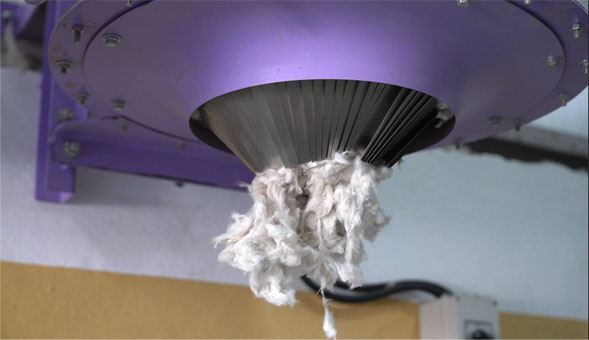

Textile mills generate enormous amounts of airborne fiber, dust, and lint during spinning, weaving, knitting, and finishing operations. These particles do not just settle on machines and floors; they circulate through the entire production environment, affecting fabric quality, worker health, and equipment performance. A properly designed fiber collection system captures these contaminants at the source and turns a chaotic, dust-heavy workspace into a controlled, efficient facility. For mills aiming to compete on quality and sustainability, fiber collection has shifted from a maintenance afterthought to a core part of cleaner production.
Why You Need a Fiber Collection System in Textile Production
Every meter of yarn or fabric produced in a mill releases microscopic fibers into the surrounding air. Without a dedicated collection system, those fibers accumulate on machinery, ducts, lighting fixtures, and even the products themselves. The result is contamination that no amount of manual cleaning can keep up with, especially in high-volume operations running multiple shifts.
A fiber collection system pulls airborne particles directly from the source, whether that is a carding machine, a ring spinning frame, or a weaving loom. By capturing fibers before they spread, the system protects sensitive components like spindles, drafting rollers, and electronic sensors. Machines run smoother, breakdowns drop, and the intervals between deep cleanings get much longer.
There is also a productivity angle that often goes overlooked. When operators spend less time clearing lint from machines and more time managing actual production, throughput improves. Mills that install proper fiber extraction frequently report measurable gains in machine uptime within the first few months of operation.
Finally, regulators and brand auditors are paying closer attention to indoor air quality and emission control in textile facilities. A fiber collection system is no longer optional infrastructure; it is a baseline expectation for any mill that wants to supply major buyers or operate within stricter environmental frameworks.
How Airborne Dust and Lint Ruin Fabric Quality
Quality issues in textile production often trace back to a culprit nobody sees clearly: floating fibers in the workshop air. When loose lint settles on yarn during spinning or on fabric during weaving, it creates visible defects such as slubs, neps, foreign fiber contamination, and uneven dye uptake. These defects rarely show up until the finished goods reach inspection, by which point the cost of rework or rejection is already locked in.
Different fiber types behave differently in the air. Cotton releases short, sticky fibers that cling to humid surfaces. Synthetic fibers like polyester carry static charges that make them attach to almost anything. Blended yarn production combines both problems, which is why blended mills tend to suffer the worst contamination issues without proper extraction.
Dust accumulation also disturbs the climate control inside the mill. Humidity sensors get coated, temperature readings drift, and the precisely balanced atmosphere needed for consistent yarn properties starts to fail. Yarn strength, elongation, and evenness can all shift outside tolerance bands when the air is not properly cleaned.
A well-tuned fiber collection system addresses the problem at its origin rather than chasing the symptoms. By keeping the air clean throughout the production chain, mills produce fabric with fewer defects, more consistent properties, and far less waste headed to the downgrade pile.
Health and Safety: Protecting Workers from Textile Dust
The people working inside a textile mill are the first to feel the impact of poor dust control. Long-term exposure to cotton dust is linked to byssinosis, a respiratory condition once so common in the industry that it earned the nickname "brown lung." Synthetic fiber dust brings its own risks, including chronic bronchitis and skin irritation. Even short-term exposure can trigger coughing, eye irritation, and reduced lung function.
Beyond the health risks, accumulated lint is a serious fire hazard. Cotton dust is highly combustible, and when it builds up on hot machinery, lighting, or electrical panels, the conditions for a flash fire are already in place. Many of the most damaging fires in textile history started from ignited lint deposits, not from raw material storage.
Worker safety regulations in most countries now set strict limits on respirable dust concentrations inside textile facilities. Meeting those limits without an engineered fiber collection system is nearly impossible at industrial scale. Manual cleaning simply cannot keep up with the rate at which fibers are released during production.
A proper extraction setup creates a workspace where breathing is easier, visibility is better, and fire risk drops dramatically. Mills that invest in dust control also tend to see lower absenteeism and better employee retention, which matters in a sector where skilled operators are increasingly hard to find.
Can Fiber Collection Make Your Factory More Sustainable?
Sustainability conversations in textiles usually focus on water, dyes, and energy, but fiber waste deserves the same attention. Every kilogram of fiber lost to the floor, the air, or the cleaning bin represents raw material that was paid for, processed, and then discarded. Recovering that fiber turns a waste stream into a resource.
Modern fiber collection systems do more than just trap dust. They separate and consolidate recovered fibers into clean, baled material that can be sold to recyclers, reused in nonwoven applications, or blended back into lower-grade yarn production. For mills running thousands of spindles, the recovered tonnage adds up to a meaningful revenue line.
Here are some of the sustainability benefits that come directly from a well-designed fiber collection system:
- Reduced raw material loss, since fibers that would otherwise become waste are captured and reintegrated into the production cycle or sold as recyclable material.
- Lower energy consumption in HVAC systems, because cleaner air requires less filtration load and allows climate control units to operate more efficiently.
- Smaller landfill footprint, with compacted fiber waste taking up far less volume and often qualifying for recycling instead of disposal.
- Improved compliance scores during sustainability audits from major buyers, who increasingly require documented evidence of waste reduction practices.
- Lower water usage for cleaning, since less dust settles on surfaces that would otherwise need frequent wet cleaning.
The financial argument follows the environmental one closely. A mill that recovers a meaningful share of its fiber loss often sees the system pay for itself within a reasonable timeframe through material savings, lower disposal costs, and reduced energy bills.
Choosing the Right Fiber Extraction System for Your Mill
Not every fiber collection setup fits every mill. The right configuration depends on the type of fiber processed, the layout of the production hall, the number and type of machines connected, and the volume of dust generated per hour. A mismatched system either underperforms or wastes energy moving more air than needed.
When evaluating a fiber extraction system, the following factors should guide the decision:
- Type of fiber processed, since cotton, wool, polyester, and blended fibers all behave differently in suction systems and require specific filter media and air velocities.
- Production volume and machine count, which determine the total airflow capacity and the diameter of the ducting network needed to serve every connected point.
- Filtration technology, including options like rotary drum filters, condenser units, and multi-stage filtration that handle different particle sizes and load levels.
- Energy efficiency features, such as variable speed drives and pressure-controlled fans, which keep operating costs in check over the long lifespan of the equipment.
- Maintenance accessibility, because filters, fans, and ducting all need regular service, and a system that is hard to clean will eventually be neglected.
- Integration with existing infrastructure, especially when retrofitting an older mill where space and ceiling height may limit certain designs.
Working with a supplier who understands textile-specific extraction is the difference between a system that performs for decades and one that needs constant adjustment. Generic industrial dust collection rarely meets the demands of a textile environment, where fiber loads are higher and more variable than in most other industries.
Achieve Cleaner Production with Tufekci Machine Solutions
Tufekci Machine has spent decades engineering fiber collection and dust extraction systems specifically for the textile industry. The experience shows in the details, from filter selection matched to specific fiber types to ducting layouts that account for the realities of busy production halls. Every system is designed around the actual conditions of the mill, not a generic template.
The product range covers the full chain of textile dust and lint management, including central filtration units, rotary drum filters, condenser systems, and complete pneumatic conveying networks. Mills can start with a focused installation on a single process line or commission an integrated solution that serves the entire facility. For more detail on what is available, the dust and lint collection solutions page covers the full range of systems and configurations.
Beyond the hardware, what often makes the difference is the engineering support that comes before and after installation. Site surveys, airflow calculations, energy assessments, and operator training all contribute to a system that actually delivers what it promises on paper. Mills that work with experienced specialists tend to see faster commissioning, fewer post-installation issues, and better long-term performance.
For textile producers thinking seriously about cleaner production, the question is not whether to invest in fiber collection, but how to do it in a way that fits the specific demands of the operation. The right partner makes that decision much easier, and the results show up in fabric quality, worker wellbeing, and the bottom line within the first year of operation.