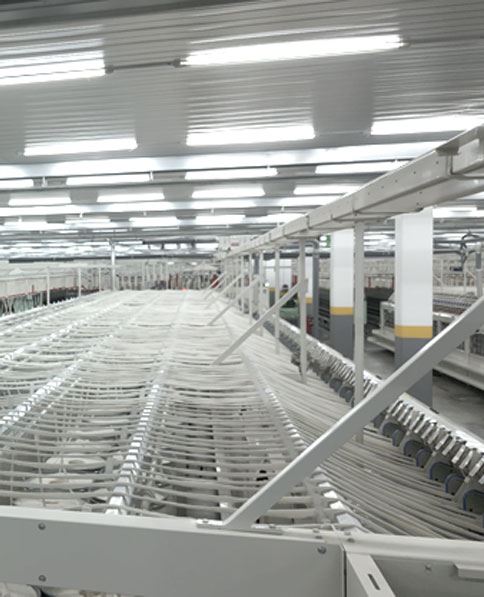

The Importance of Climate Conditioning Systems for Energy Efficiency in Textile Factories
The textile sector is one of the industries that stands out with high energy consumption in its production processes. From fiber preparation to yarn production, weaving to dyeing, machines used at every stage require proper climate conditioning conditions. At this point, the energy-efficient climate conditioning solutions developed by Tüfekçi Makine contribute to textile factories both improving production quality and reducing energy costs.
Climate Conditioning for Production Quality
Cotton and synthetic fibers are directly affected by changes in temperature and humidity. Failure to maintain appropriate humidity levels increases yarn breakage, production errors, and waste rates.
Energy Efficiency and Cost Advantage
Compared to traditional systems, modern climate conditioning solutions provide energy savings of up to 20–30% in textile factories.
Technologies offered by Tüfekçi Makine:
Reuse of waste energy through heat recovery systems,
Energy consumption optimized according to demand through variable fan speed and air flow control,
Maximum performance with minimum energy thanks to high-efficiency motor and fan technologies,
A stable production environment under all conditions through smart automation and monitoring systems, can be summarized as follows.
Contribution to Sustainability and the Future
Energy-efficient climate conditioning systems not only reduce costs but also minimize environmental impact. With the solutions it develops in line with its sustainable production vision, Tüfekçi Makine supports textile factories in reducing their carbon footprint. In this way, businesses stand out in both national and international markets as environmentally responsible and sustainable producers.
The importance of climate conditioning systems for energy efficiency in textile factories is increasing day by day. With its innovative engineering solutions, Tüfekçi Makine continues to add value to the sector by ensuring production quality while minimizing energy consumption through its systems.